National Rail. Translating sustainable travel into everyday impact
Role: Art Direction and Graphic Design. Agency: Storycatchers
Context
National Rail wanted to encourage Gen Z audiences to choose train travel over the car, but the core challenge was not awareness. Most people already understand that train travel is more sustainable. The problem was that carbon impact is abstract, hard to visualise and easy to ignore.
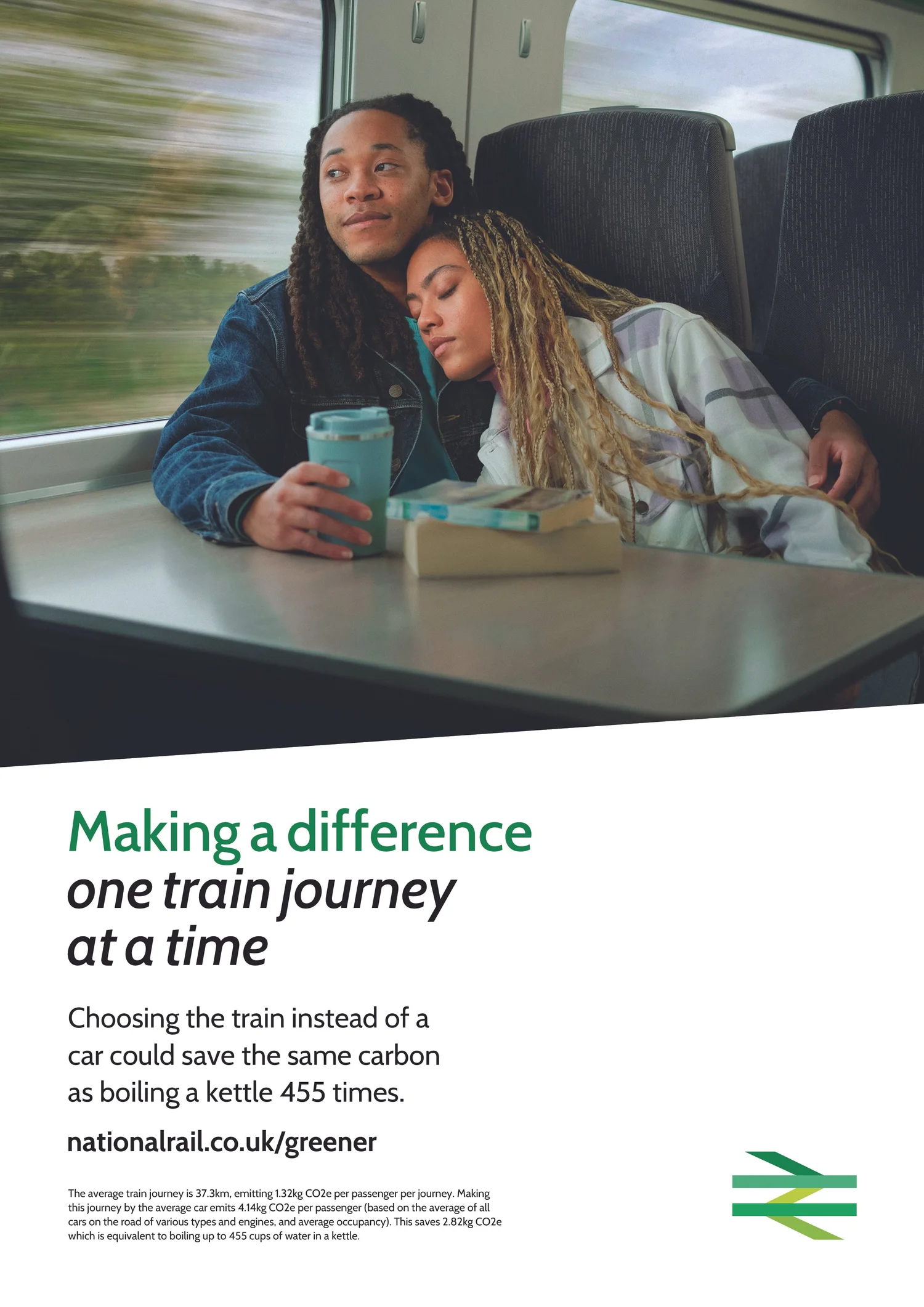
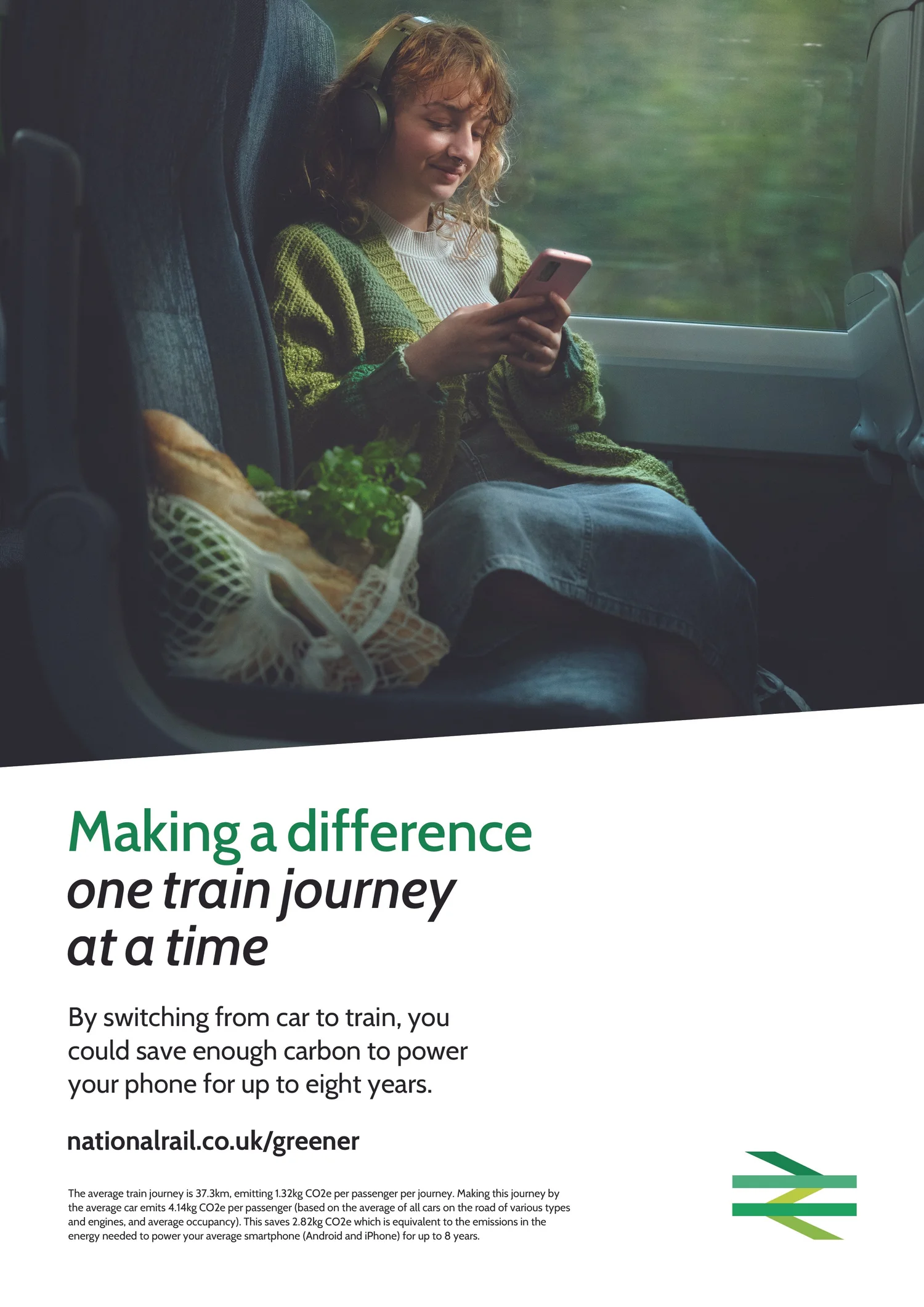
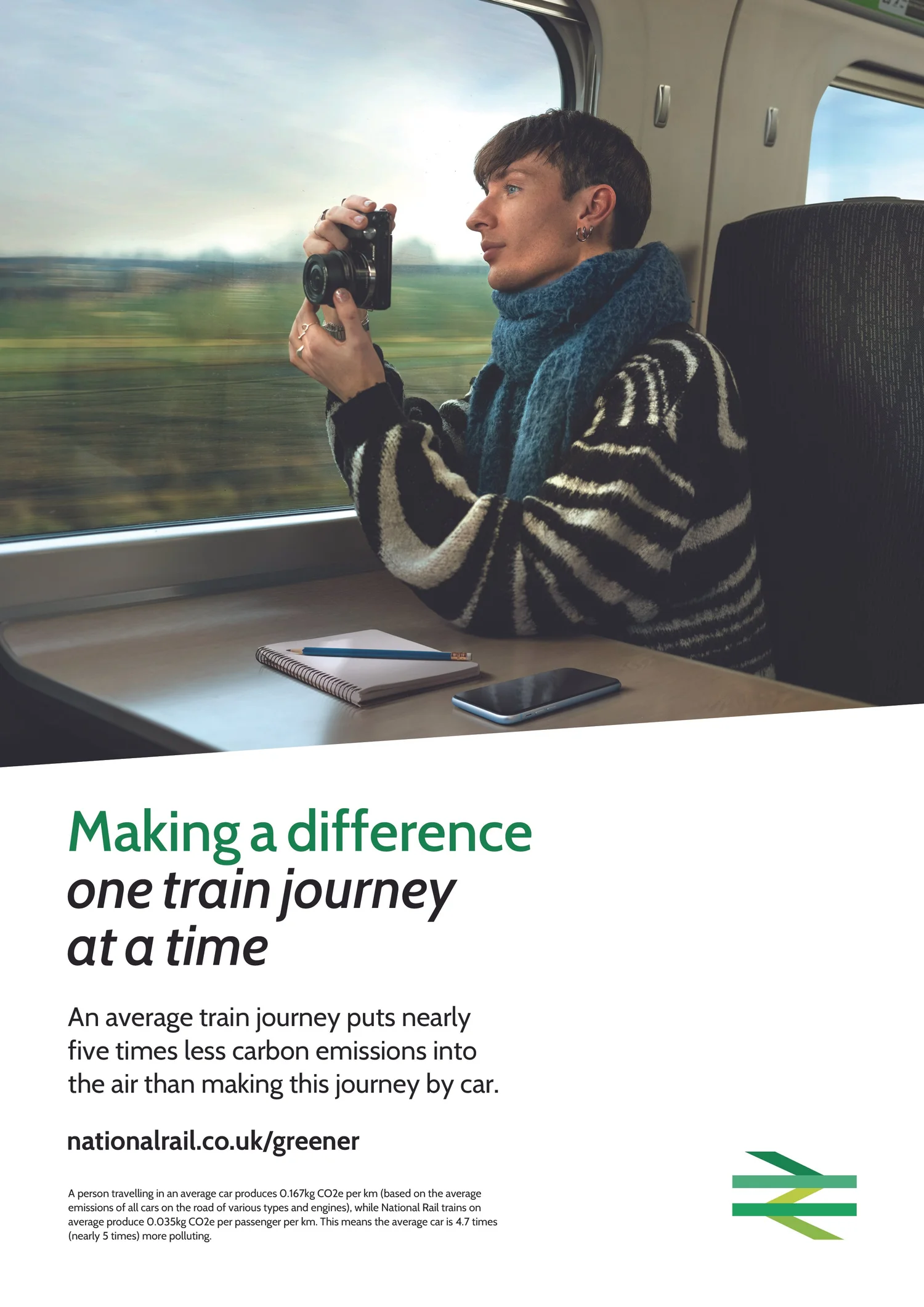
The aim of the campaign was to quantify the environmental impact of a single train journey in ways that feel tangible and relatable, translating carbon savings into everyday equivalents that people could easily grasp and remember.
My role
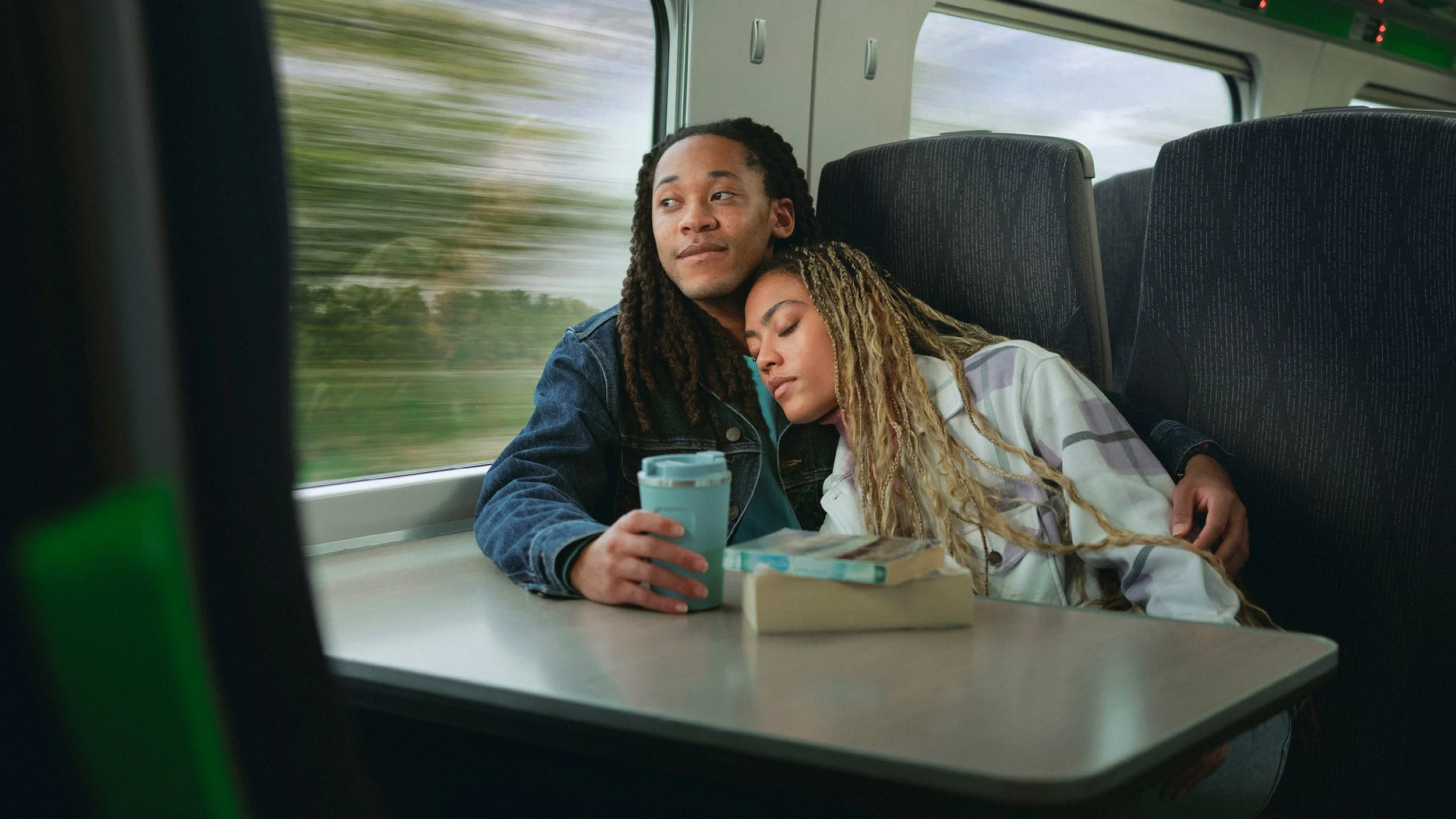
I directed the photography and short-form video on location, shooting on a live train journey between Paddington and Cardiff. Working within a constrained, moving environment, I focused on capturing quiet, recognisable travel moments that felt unforced and believable, providing a human counterpoint to the data-led messaging. Alongside the shoot, I designed the final layouts for all campaign assets, balancing clear information hierarchy with warmth and restraint so the quantified messages could land without feeling instructional or overwhelming.
Creative approach
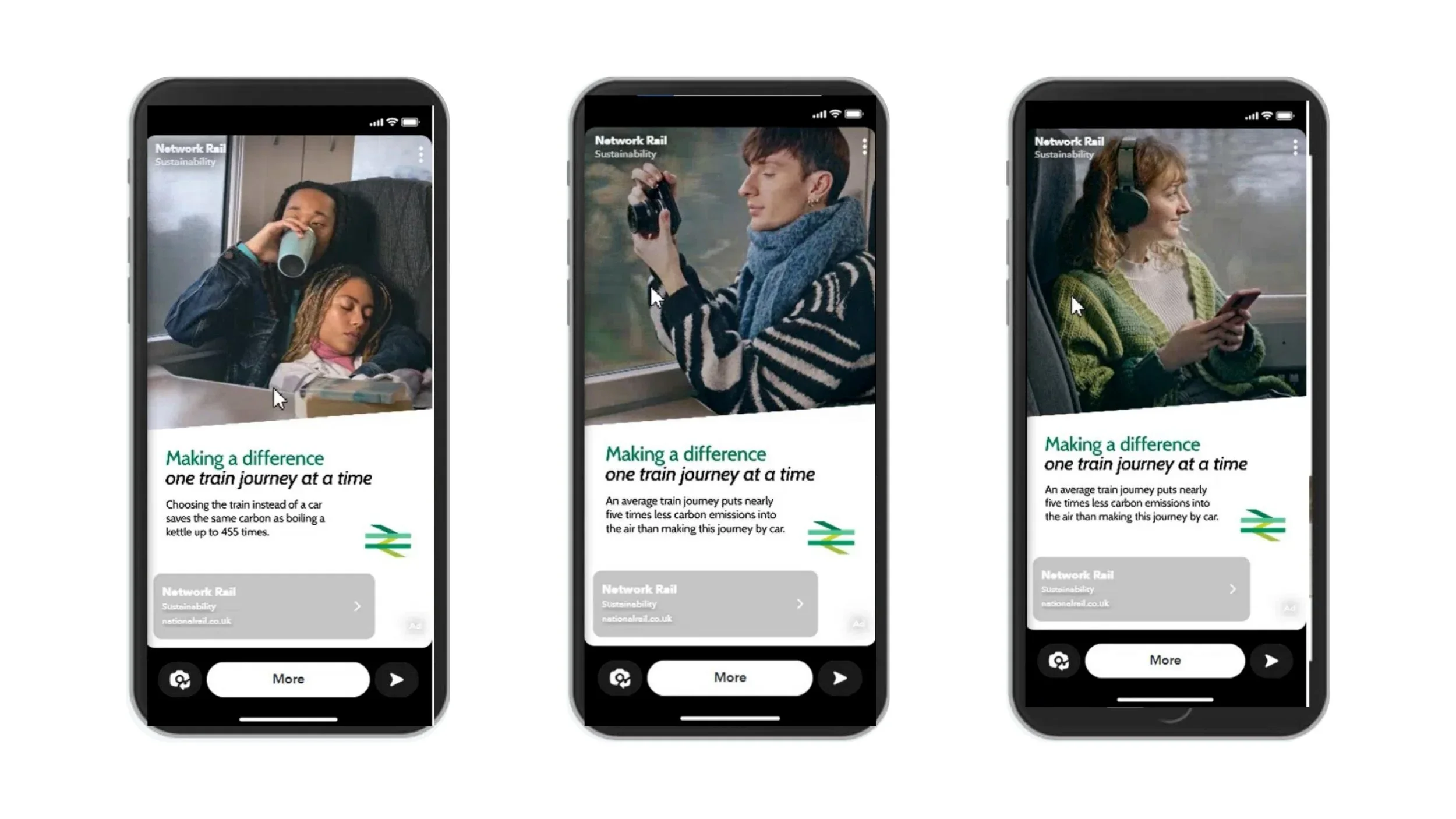
The creative idea centred on making carbon savings legible. Instead of abstract figures, the campaign expressed impact through everyday metrics like the number of times a kettle could be boiled or how long a phone could be powered so people could immediately understand the scale of a single choice.
Visually, the work paired calm, observational imagery with straightforward, accessible design. The art direction avoided overt performance or advocacy, letting the combination of familiar moments and translated data do the persuasive work.
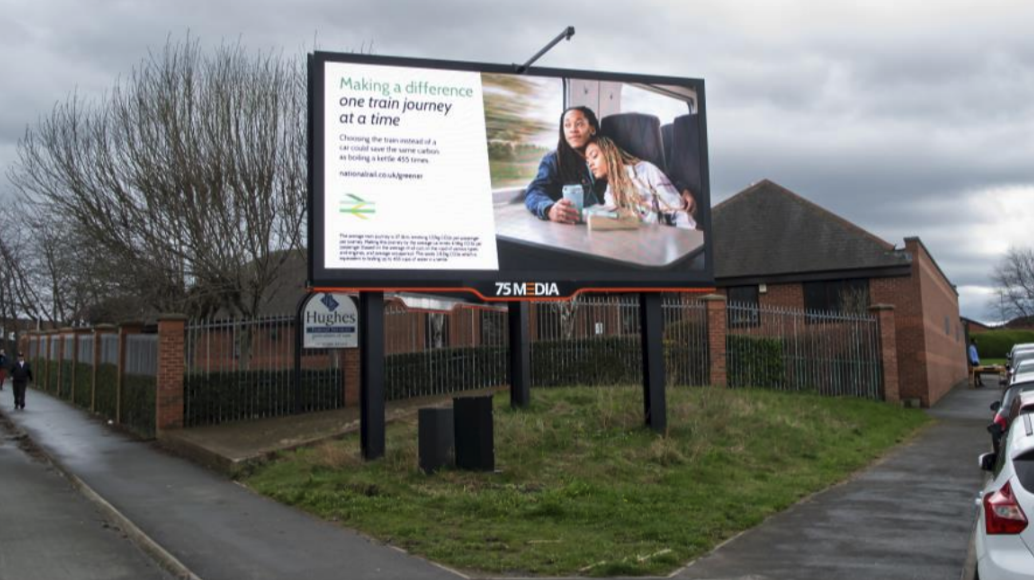
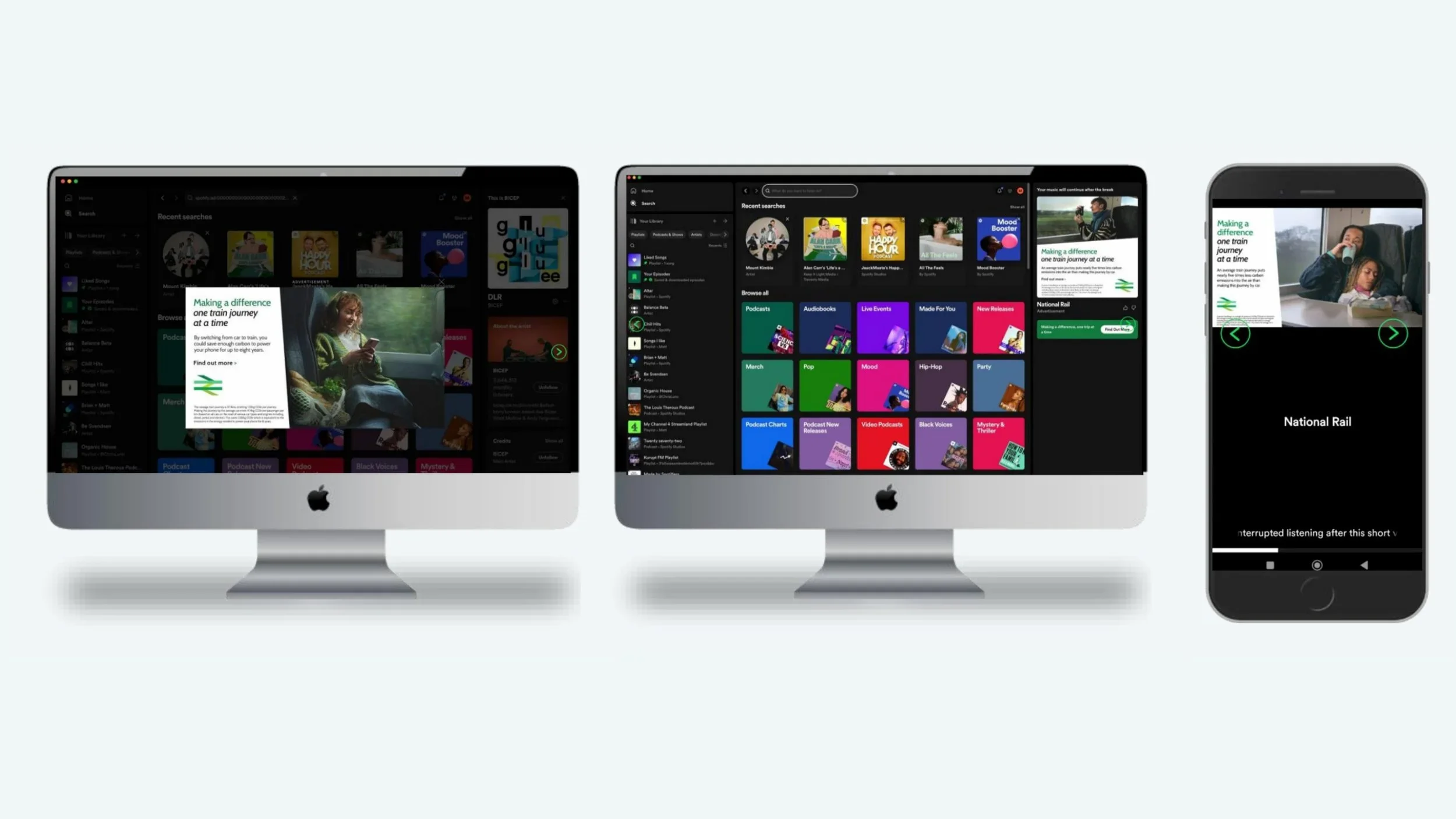
Design decisions prioritised clarity, consistency and ease of reading across formats, ensuring the message held together whether encountered on a phone, in-station or outdoors.
Media placement and audience context
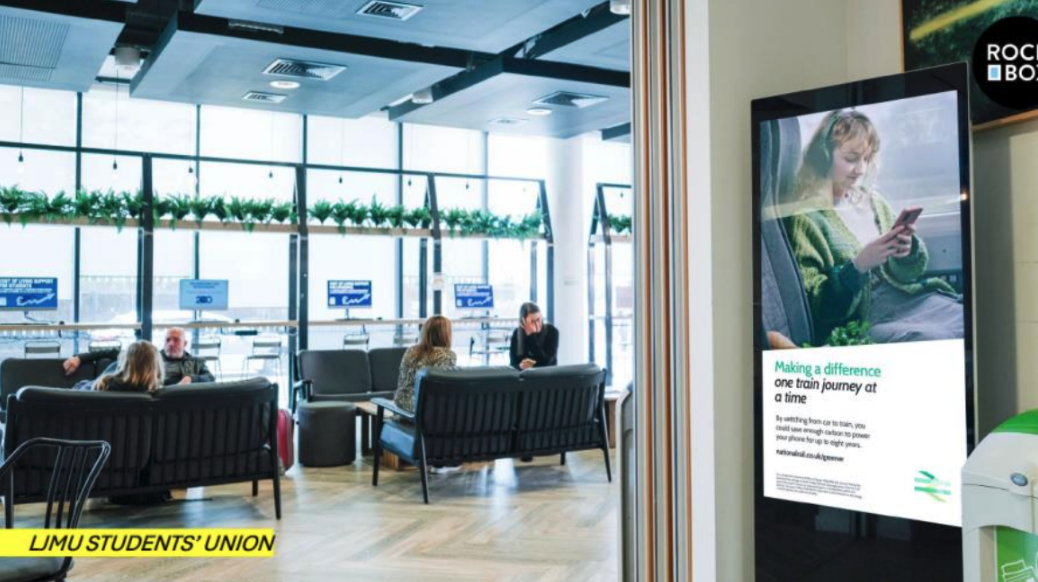
To reach Gen Z audiences in environments where they were already receptive, the campaign was placed across student unions and higher education settings, alongside targeted social channels.
Physical placements in student spaces allowed the work to sit naturally within everyday routines, while social formats were designed to work natively within feeds rather than interrupt them. This combination ensured the message was encountered both in moments of travel and in the digital spaces where the audience spent time, reinforcing recognition and recall without repetition fatigue.
Outcomes
The campaign resulted in over 200,000 additional train journeys during a five-week period.
It achieved an ROI of £3.49 for every £1 spent and generated statistically significant positive sentiment in post-campaign research.
By focusing on visual clarity, contextual placement and relatable translation rather than instruction, the work demonstrated how complex environmental information can be made meaningful at a human scale.